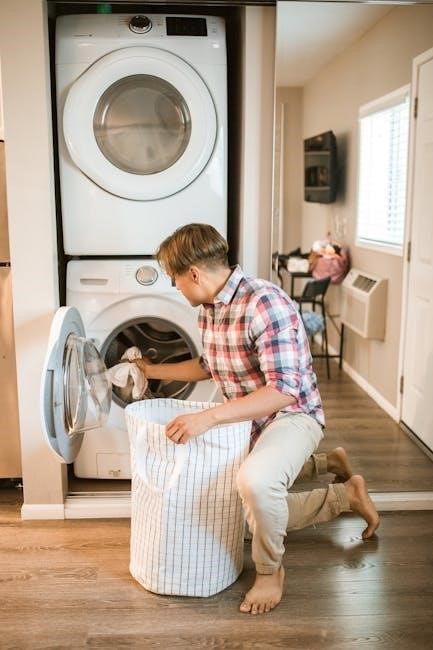
GE Profile washing machines represent a blend of innovation and reliability, offering advanced features for optimal laundry care. Accessing the owner’s manual is crucial for maximizing performance and understanding specific model functionalities.
This manual simplifies setup and operation, providing clear instructions and diagrams for a seamless experience with your GE Profile appliance.
Overview of GE Profile Series
GE Profile washers are designed with cutting-edge technology, offering a premium laundry experience. This series distinguishes itself through innovative features like steam wash, sanitize cycles, and smart connectivity via Cync compatibility.
These machines prioritize fabric care and cleaning performance, catering to diverse laundry needs. The GE Profile series often includes models with advanced wash cycles and intuitive controls. Finding your specific model’s manual through GE Appliances’ website ensures you unlock all available features and maintain optimal operation.
Older models can still have manuals found on the website, simplifying appliance ownership.
Importance of the Owner’s Manual
The owner’s manual is your essential guide to understanding and properly operating your GE Profile washing machine. It contains critical safety precautions, detailed operating instructions, and troubleshooting tips.
Before first use, carefully read all instructions to prevent damage to the appliance or your laundry. The manual details proper loading techniques, detergent usage, and cycle selection.
Accessing the manual – easily found online via GE Appliances’ support section – ensures optimal performance, extends the machine’s lifespan, and facilitates efficient problem-solving.

Safety Precautions
GE Profile washers require careful operation. Always read all instructions before use, avoiding washing items cleaned with flammable substances, and heed all warnings.
General Safety Guidelines
Prior to operating your GE Profile washing machine, ensure a stable and level installation. Always disconnect the power supply before any maintenance or cleaning. Never allow children to play with or around the appliance, as it presents potential hazards.
Do not wash items previously treated with flammable solvents. Inspect pockets for objects that could damage the machine or cause injury. Avoid overloading the washer, as this can affect performance and safety. Read all instructions thoroughly before initial use to ensure safe and efficient operation.
Electrical Safety Instructions
To prevent electrical shock, always ensure the washing machine is properly grounded. Never operate the appliance with a damaged power cord or plug. Do not use an extension cord, as it may overheat and pose a fire risk. Disconnect the power supply before cleaning or performing maintenance.
Avoid exposing the electrical components to water or moisture. If the power cord is damaged, it must be replaced by a qualified technician. Ensure the voltage and frequency of the power supply match the appliance’s specifications. Follow all local electrical codes.
Child Safety Warnings
Close supervision is essential when children are near the washing machine. Never allow children to play with the appliance, its controls, or the laundry products. Keep detergents, bleach, and fabric softeners out of reach of children. Do not allow children to climb inside the washing machine.
Always lock the door when the machine is not in use to prevent accidental entry. Be aware of the risk of entrapment if the door is left open. Instruct children about the dangers associated with operating the appliance. Ensure the machine is stable and cannot tip over.
Machine Overview & Parts Identification
Familiarize yourself with the exterior and interior components, including the drum and dispensers. Understanding the control panel is key to operating your GE Profile washer effectively.
Exterior Components
The exterior of your GE Profile washing machine features a durable cabinet, often with a sleek finish. Key components include the lid or door (depending on the model), the control panel displaying cycle selections and options, and the detergent dispenser area.
Inspect the back panel for water supply connections (hot and cold), the drain hose, and the power cord. Note the location of any leveling feet, crucial for stable operation. Pay attention to any access panels for maintenance purposes, as detailed in the manual.
Always refer to your specific model’s manual for precise component locations and descriptions, as designs can vary.
Interior Components (Drum, Dispensers)
Inside your GE Profile washer, the stainless steel drum is the central washing area. Examine its surface for any obstructions before each load. Locate the detergent dispenser, typically divided into compartments for detergent, bleach, and fabric softener – consult the manual for proper usage.
Understand the dispenser’s automatic release timing to ensure additives are dispensed at the correct stage of the wash cycle. Note any removable filters within the drum or dispenser area; regular cleaning is vital. Refer to the manual for detailed cleaning instructions.
Control Panel Explained
The GE Profile washer’s control panel features a digital display and various buttons or a dial to select wash cycles and options; Familiarize yourself with cycle names like Normal, Delicate, and Heavy Duty. Explore modifier buttons for temperature, spin speed, and soil level.
Utilize the manual to decode any icons or symbols displayed. Understand the start/pause button’s function and any lock features. Note the presence of Wi-Fi connectivity indicators if your model supports smart features via the Cync app.

Getting Started: Installation
Proper installation ensures optimal performance. Carefully unpack the machine, inspect for damage, level it, and connect the water supply following the manual’s guidance.
Unpacking and Inspection
Carefully unpack your new GE Profile washing machine, ensuring you have ample space to maneuver. Retain all packaging materials until you’ve confirmed the appliance is undamaged. Inspect the machine thoroughly for any shipping damage – dents, scratches, or broken parts.
Check for loose components inside the drum. If damage is present, immediately contact the retailer or GE Appliance Customer Support. Do not attempt to operate a damaged machine. Verify all included accessories, as listed in the manual, are present before proceeding with installation.
Leveling the Washing Machine
Proper leveling is essential for quiet operation and preventing excessive vibration. Use a bubble level to check the machine’s stability on the floor. Adjust the leveling legs – typically located at the bottom corners – by rotating them clockwise or counterclockwise.
Continue adjustments until the bubble is centered. Ensure all legs firmly contact the floor. Tighten the lock nuts against the machine’s base to secure the legs in place. Re-check leveling after adjustments. An unleveled machine can cause operational issues.
Water Supply Connection
Connect the water supply hoses to the designated hot and cold water faucets. Ensure a tight, secure connection to prevent leaks. Use new hoses; do not reuse old ones. Hand-tighten, then use pliers to turn an additional half-turn.
Check for leaks at both the faucet and washer connections. Slowly turn on the water supply and inspect again. Proper water pressure is crucial for optimal performance; consult the manual for specifications.

Operating Instructions
Load laundry loosely into the drum, avoiding overpacking. Add detergent, bleach, and fabric softener to the appropriate dispensers, then select your desired wash cycle.
Loading the Washing Machine
Proper loading ensures effective cleaning and prevents damage to both your clothes and the machine. Distribute items evenly inside the drum, avoiding tightly packed bundles.
For optimal results, leave sufficient space at the top of the drum – approximately a hand’s width – to allow for proper tumbling action.
Separate items by fabric type, color, and soil level before loading. Check pockets for any objects that could cause damage or clog the drain. Avoid overloading, as this can reduce cleaning performance and strain the motor.
Adding Detergent, Bleach, and Fabric Softener
GE Profile washers feature designated dispensers for detergent, bleach, and fabric softener. Always use HE (High Efficiency) detergent to avoid excessive suds and maintain optimal performance.
Pour the appropriate amount of detergent into the detergent dispenser, following the manufacturer’s instructions based on load size and soil level.
Bleach should be diluted before adding to the bleach dispenser, and fabric softener goes into its designated compartment. Avoid overfilling dispensers to prevent residue buildup and ensure proper dispensing during the wash cycle.
Selecting Wash Cycles
GE Profile washers offer a variety of wash cycles to accommodate different fabric types and soil levels. Utilize the control panel to select the appropriate cycle, such as Normal, Delicate, Heavy Duty, or Sanitize.
Consider load size and fabric care labels when choosing a cycle. Options may include water temperature adjustments and spin speed modifications for customized cleaning.
Refer to your owner’s manual for detailed descriptions of each cycle and recommended settings to ensure optimal results and prevent damage to your garments.

Understanding Wash Cycles
GE Profile washers feature cycles like Normal, Delicate, and Heavy Duty, each designed for specific fabrics and soil levels. Consult your manual for details!
Normal/Regular Cycle
The Normal/Regular cycle on your GE Profile washing machine is ideal for everyday laundry loads containing a mix of fabrics and soil levels. This cycle utilizes a balanced combination of wash times, agitation speeds, and water temperatures to deliver a thorough clean without being overly harsh on your clothes.
Refer to your owner’s manual for specific water temperature recommendations based on the fabrics you are washing. It’s generally suitable for cottons, linens, and durable synthetics. Adjust load size for optimal cleaning performance, avoiding overloading the drum.
Delicate/Hand Wash Cycle
The Delicate/Hand Wash cycle is specifically designed for fragile items requiring gentle care. This cycle uses slow agitation speeds and a shorter wash time to minimize wear and tear on delicate fabrics like lingerie, silk, and lace.
Consult your GE Profile washing machine’s owner’s manual for recommended detergent types and amounts. Always use a mesh laundry bag for extra protection. Avoid using hot water, as it can damage delicate materials. This cycle ensures a gentle yet effective clean for your most treasured garments.
Heavy Duty Cycle
The Heavy Duty cycle is engineered for robust cleaning of heavily soiled items like work clothes, towels, and durable fabrics. This cycle utilizes extended wash times, vigorous agitation, and higher spin speeds to effectively remove stubborn dirt and stains.
Refer to your GE Profile washing machine’s owner’s manual for load size recommendations. Using the appropriate amount of heavy-duty detergent is crucial for optimal results. Avoid overloading the machine, as this can hinder cleaning performance and potentially damage the appliance.

Advanced Features
GE Profile washers boast innovative features like Steam Wash, Sanitize cycles, and Wi-Fi connectivity via Cync, enhancing cleaning and convenience – consult your manual!
Steam Wash Function
Steam Wash on your GE Profile washing machine utilizes the power of steam to penetrate fabrics, offering a deep and thorough clean. This feature is particularly effective for removing stubborn stains and allergens, leaving clothes fresh and revitalized.
Refer to your owner’s manual for specific instructions on activating and optimizing the Steam Wash cycle. It details appropriate load sizes and detergent recommendations for best results. Steam helps sanitize without harsh chemicals, benefiting sensitive skin and delicate items. Explore the manual for cycle variations and customization options.
Sanitize Cycle
The Sanitize Cycle on your GE Profile washer is designed to eliminate bacteria and germs, providing a higher level of cleanliness. This cycle uses elevated water temperatures to effectively disinfect laundry, ideal for items like baby clothes, bedding, and heavily soiled loads.
Consult your owner’s manual for detailed guidance on utilizing the Sanitize Cycle. It specifies load capacity limits and recommended detergent types. This cycle isn’t suitable for all fabrics; always check garment care labels before use to prevent damage. Proper usage ensures optimal sanitization.
Wi-Fi Connectivity & Smart Features (Cync Compatibility)
Certain GE Profile washing machines offer Wi-Fi connectivity, enabling remote control and monitoring via the Cync app. This allows you to start or pause cycles, receive notifications, and access helpful diagnostics from your smartphone.
Your owner’s manual provides instructions for connecting your washer to your home Wi-Fi network and setting up a Cync account. Integration with Google Nest allows voice control through Google Assistant. Explore the app for customized wash cycles and smart features enhancing your laundry experience.

Troubleshooting Common Issues
GE Profile manuals detail solutions for issues like the machine not starting, water leaks, and error codes. Consult your manual for diagnostic steps and resolutions.
Machine Won’t Start
If your GE Profile washing machine fails to start, the owner’s manual recommends first verifying the power supply. Ensure the machine is properly plugged into a functioning outlet and that the circuit breaker hasn’t tripped.
Next, check if the door is securely latched; the machine won’t operate if the door isn’t fully closed. Consult the manual for specific troubleshooting steps related to control panel lock features or potential error codes displayed.
Finally, review the manual’s section on startup procedures to confirm all necessary steps are followed correctly.
Leaking Water
If you notice water leaking from your GE Profile washer, the owner’s manual advises immediate inspection of the water supply hoses. Ensure they are tightly connected to both the machine and the water source, checking for any cracks or damage.
Also, examine the drain hose for proper placement and secure fitting. The manual details how to check the door boot for obstructions or tears, as this is a common leak point.
Refer to the troubleshooting section for guidance on identifying the source and resolving the leak.
Error Codes and Their Meanings
Your GE Profile washing machine’s owner’s manual contains a comprehensive list of error codes and their corresponding solutions. These codes are displayed on the control panel to indicate specific issues with the machine’s operation.
Common codes relate to water supply problems, drainage issues, or internal component malfunctions. The manual provides step-by-step instructions for addressing each error, potentially saving a service call.
Always consult the manual before attempting any repairs, and note the specific code for accurate troubleshooting.

Maintenance and Cleaning
The owner’s manual details routine maintenance, including drum, dispenser, and exterior cleaning. Regular upkeep ensures optimal performance and extends the lifespan of your GE Profile washer.
Cleaning the Drum
Your GE Profile washing machine manual recommends regular drum cleaning to prevent mold and mildew buildup, ensuring fresh laundry results. Utilize the “Drum Clean” cycle with a washing machine cleaner, following the product’s instructions carefully.
Alternatively, a solution of hot water and bleach (check manual for compatibility) can be used, running a complete wash cycle. Wipe down the drum’s interior after each cleaning to remove any residue. Consistent drum cleaning maintains hygiene and prolongs the machine’s operational life, as detailed in the manual.
Cleaning Dispensers
The GE Profile washing machine manual emphasizes the importance of regularly cleaning the detergent, bleach, and fabric softener dispensers. Residue buildup can cause clogs and affect wash performance. Remove the dispensers (refer to your manual for specific removal instructions) and rinse thoroughly with warm water.
Use a soft brush to dislodge any stubborn deposits. Ensure dispensers are completely dry before reinserting them. Periodic cleaning, as outlined in the manual, prevents dispenser malfunction and ensures accurate dispensing of laundry products.
Cleaning the Exterior
The GE Profile washing machine manual recommends cleaning the exterior with a mild detergent and warm water. Avoid abrasive cleaners, as they can damage the finish. Gently wipe down the cabinet, control panel, and lid or door. For stainless steel surfaces, use a stainless steel cleaner for optimal shine.
Always dry the exterior thoroughly after cleaning to prevent water spots. Regular cleaning, as detailed in the manual, maintains the appliance’s appearance and prevents corrosion, ensuring long-lasting beauty and functionality.
Registration and Support
Registering your GE Profile appliance online unlocks access to valuable support resources and ensures you receive important updates, as outlined in the manual.
Registering Your Appliance Online
Registering your new GE Profile washing machine online is a simple yet vital step. This process, detailed within your owner’s manual, allows GE to keep you informed about software updates, potential safety notifications, and exclusive promotions.
Creating a user account on the GE Appliances website is required for downloadable products and streamlines access to support. Registration also facilitates efficient warranty claims should the need arise. Helpful websites and phone numbers for consumer support are readily available within the manual itself, offering multiple avenues for assistance.
GE Appliance Customer Support Contact Information
GE Appliance provides comprehensive customer support for your Profile washing machine. Your owner’s manual details various contact methods, ensuring assistance is readily available. For immediate help, visit the GE Appliances website’s support section, offering FAQs and troubleshooting guides.
Alternatively, you can reach GE’s dedicated support team via phone. The manual lists the specific contact number for washing machine inquiries. Online chat support is also frequently available, providing real-time assistance from a GE representative. Don’t hesitate to utilize these resources for any questions or concerns.